,

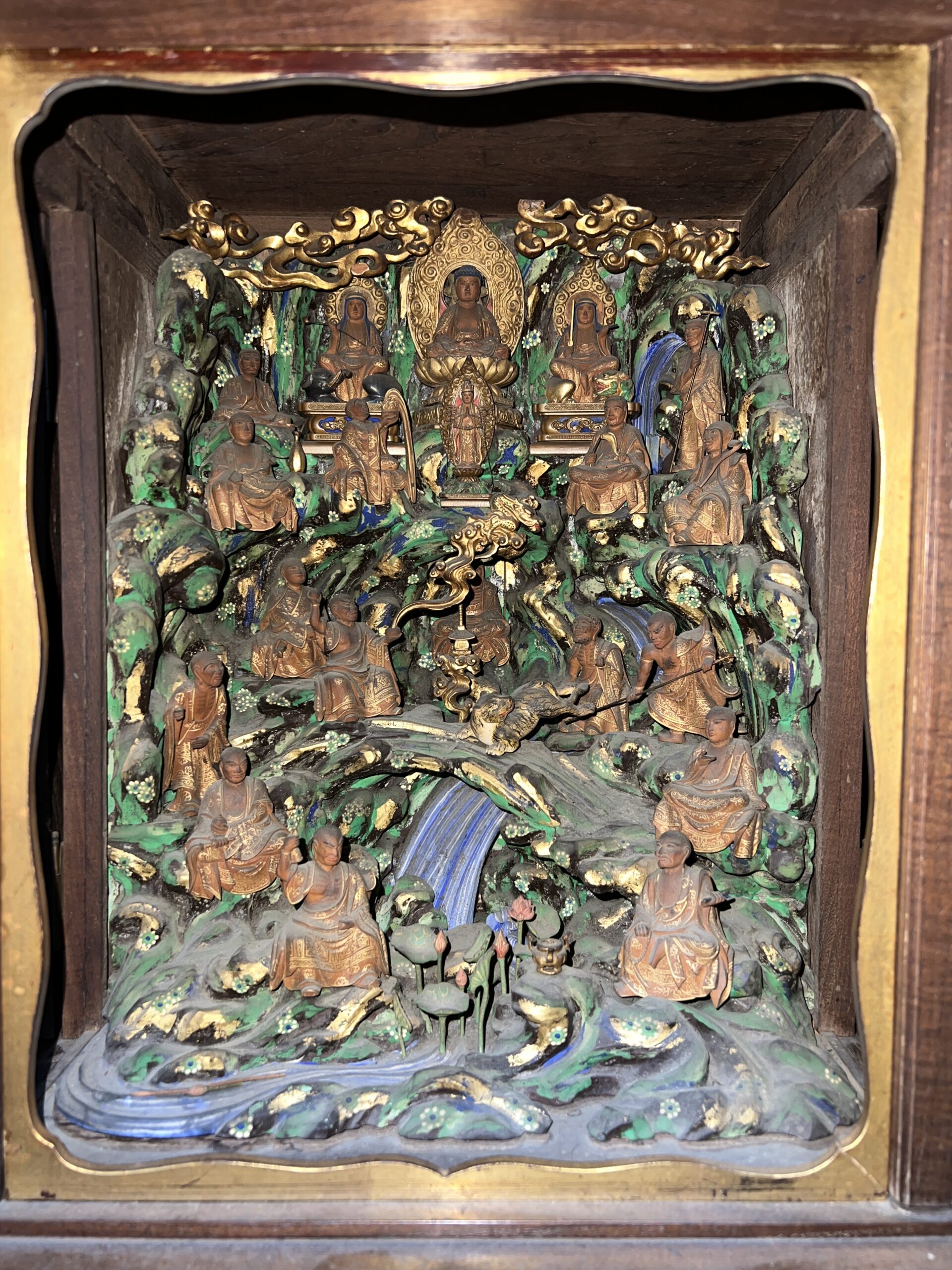
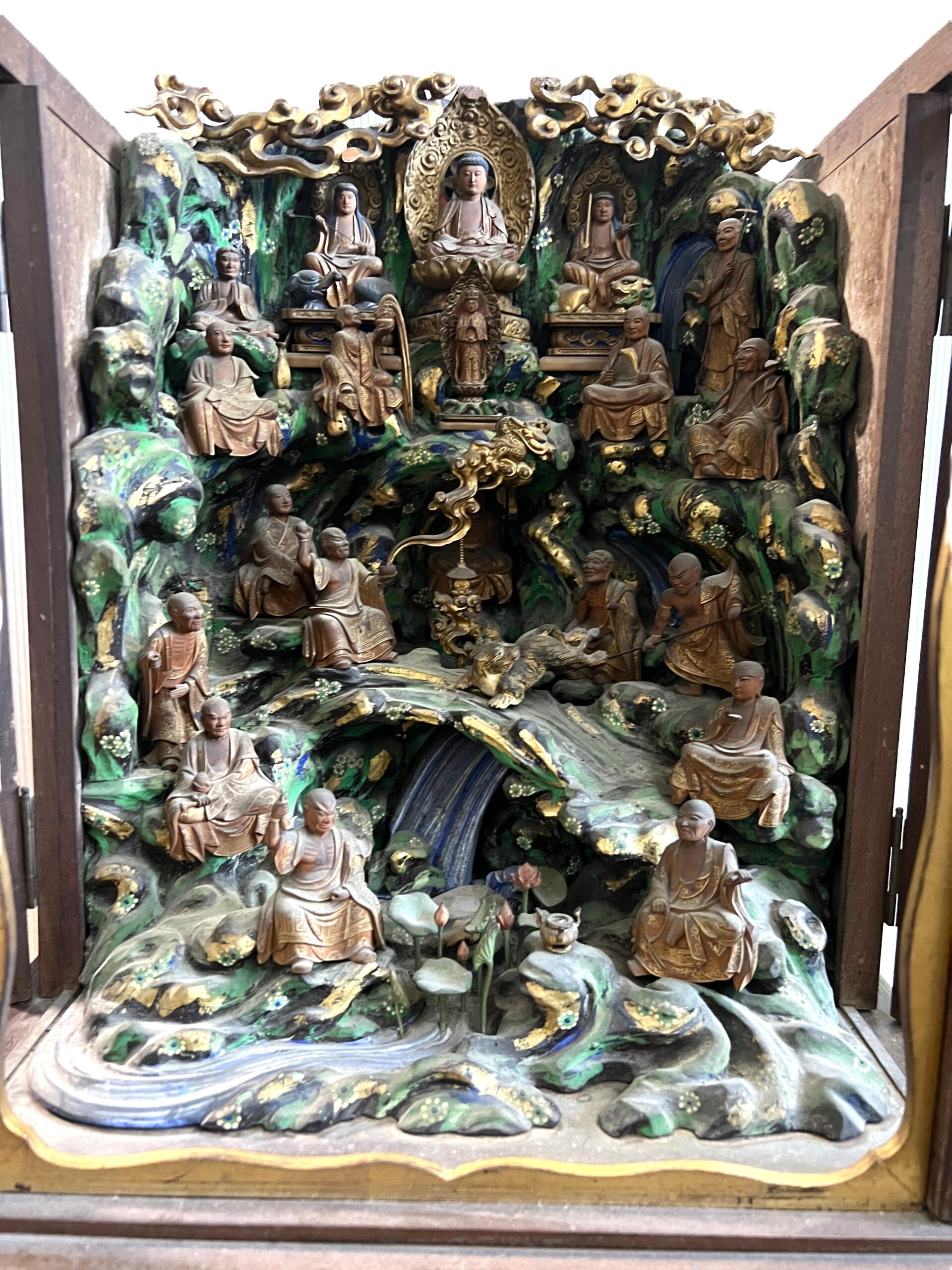
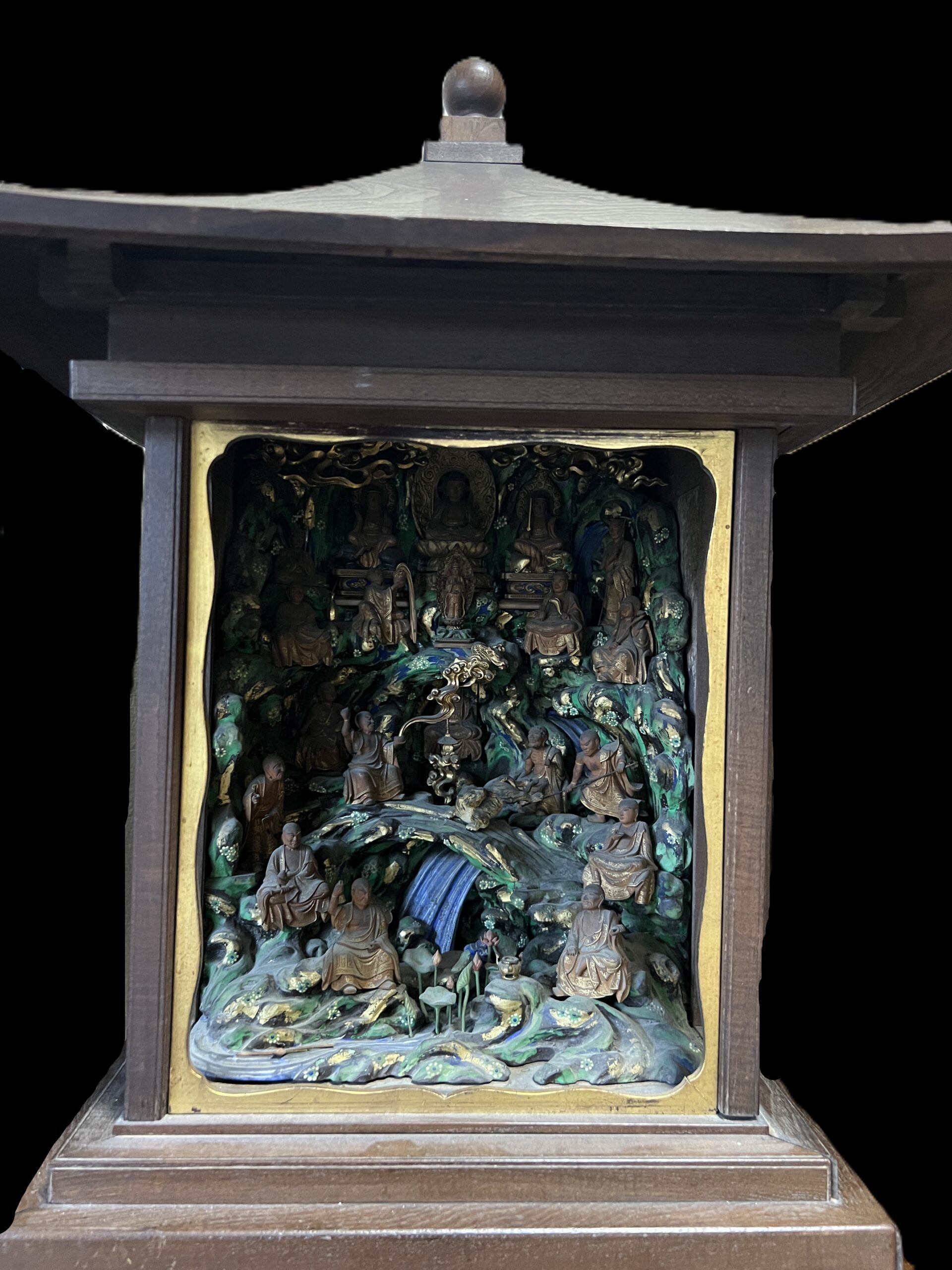
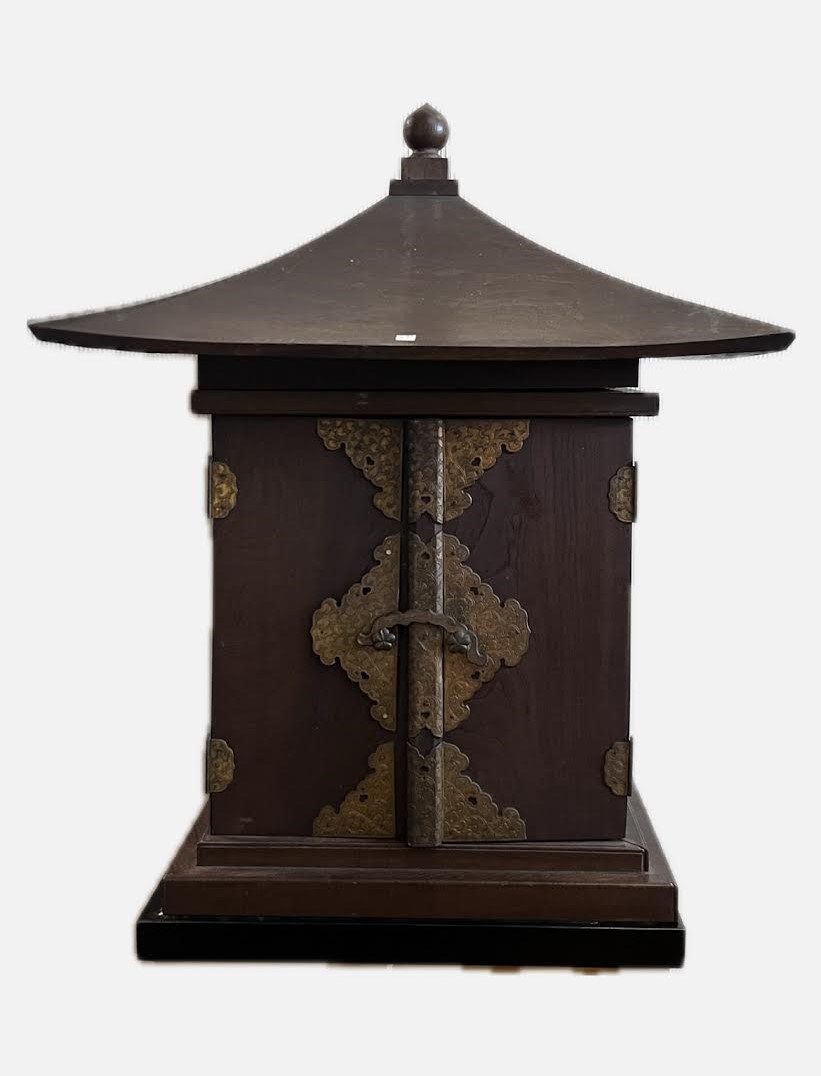
Zushi of 16 Louhans

Japan
Inside: 39cm x 29cm
Full: 51cm x 65cm

慶應四年 戊辰 簔五月十五日 Keiō yon-nen, tsuchinoe-tatsu, mino gogatsu jūgo-nichi
Date: May 15, 慶應四年 (1868), during the 戊辰 (Year of the Dragon). This was a pivotal year in Japanese history, marking the transition from the Edo period to the Meiji era.
松井乗運藤原輝朝 Matsui Jōun Fujiwara Terutomo (Name of the Artist)
Artist: Created by the prominent master artisan 松井乗運 (Matsui Jōun, 1815–1887), an elite sculptor from Kanazawa who later contributed to the major architectural woodcarvings of Higashi Hongan-ji Temple in Kyoto. “Fujiwara” represents his prestigious clan affiliation.
加陽金城南住 Kayō Kinjō nan-jū “Residing south of the Kanazawa Castle (Kinjō) in Kaga Province (Kayō)” (modern-day Ishikawa Prefecture).

御免大佛師 Gomen Daibushi- Title: “Officially Licensed Great Sculptor of Buddhist Statues.

SKU: 6826 Categories: ,
This is an intricate Japanese Diorama (Zushi) featuring a central Buddha surrounded by the Sixteen Arhats (十六羅漢, Jūroku Rakan). These legendary disciples of historical Buddha are depicted as guardians of Buddhism, possessing supernatural powers.
Key Features
 • The Grotto Setting: The rocky, green-and-gold mountain cavern replicates Mount Tiantai, the mythical mountain dwelling of the Arhats.
 • The Central Triad: A seated Amida or Shakyamuni Buddha occupies the highest point. He is flanked by two prominent deities or disciples.
 • The Arhats: Sixteen individual, expressive wooden figures are placed throughout the landscape. They hold traditional symbolic objects like staffs, scrolls, and incense burners.